
Integrative Counselling and Psychotherapy for Children, Adolescents and Families
at University of Roehampton
Train in counselling and psychotherapy and become eligible for individual practitioner registration with the British Association for Counselling and Psychotherapy, working with children and adolescents.
Course Overview
This three year part-time postgraduate degree is designed to provide you with the skills, knowledge and expertise necessary to have a positive impact on children and young people’s emotional and psychological health, as well as their overall development. The programme is designed to support your development as a therapeutic practitioner able to work one-to-one with child and adolescent clients who present with diverse psychological issues in a variety of settings including both mainstream and special education, child and adolescent mental health services (CAMHS) as well as youth and community support services. You will develop the skills necessary to be critically reflective about your own developing practice, along with an enquiring attitude to theory, research and evidence-based practice in complex areas of therapeutic work with children, adolescents and their families. The programme is based around an integrative approach to therapeutic interventions with children and adolescents, incorporating aspects from three main therapeutic and theoretical traditions; humanistic, psychodynamic and cognitive-behavioural. We take a developmental approach to thinking about the client, as we explore the developing world of the infant and growing child from a variety of important perspectives, including that of attachment theory, psychoanalytic theory as well as neuro-biological and systemic lenses. You will be encouraged to explore psychological processes and experiences from these different perspectives, and recognise the theoretical, personal and cultural assumptions which influence your own thoughts and work as a practitioner. This programme includes a focus on both Rogserian child-centred and psychodynamic perspectives and integrates these within a framework for understanding psychological and mental growth. Throughout the programme, you will develop a high level of awareness of self and the demands of the therapeutic process. This will be achieved through your own personal therapy and via small group practice-based learning parallel to the practice placements. You will be taught by experts in the field who lead on cutting-edge research projects and who have excellent links to school based counselling and child and adolescent psychopathology underpinned by our leading research. As well as cognitive and reflective skills, you will also learn practical ways of working with your clients in a therapeutic relationship to address conscious and unconscious needs and produce a change in emotional and cognitive processes and behaviour. This involves integrating complex and advanced skills, and responding creatively to complex, novel and unpredictable situations. This three year part-time postgraduate degree includes an infant observation in the first year. Based on the Tavistock model of child observation where the primary focus is on the experientially developing your capacity to become a receptive observer, you will be expected to complete twenty hours of observation in your first year. You will gain an in-depth understanding of the role of play in child development and as a therapeutic metaphor in order to develop an understanding of the child-centred theory and non-directive Play Therapy skills through which to engage with a child, to develop a therapeutic relationship and to help the child to make sense of difficult life experiences. In year two, you will focus on working with primary school age children and will focus on a non-directive play-based therapy approach. As well as attending classes at the university, students will spend at least one day per week on placement. Your placement will be a supervised clinical placement in which you will gain the necessary skills to become a competent practitioner. Placements will be offered in a variety of suitable settings. You will be expected to complete a minimum of sixty hours of client work under qualified supervision. In year three, you will see a change in focus to an integrative approach in working with adolescents, together with an introduction to cognitive-behavioural therapy and a research project.
View the course modules for this degree on the university website MA (Hons) Integrative Counselling and Psychotherapy for Children, Adolescents and Families course page www.roehampton.ac.uk
Roehampton Campus Life
Roehampton is a modern London university with a lively, forward-thinking culture. It has strong links to business and industry, world-class research, and a wide range of courses for international students.
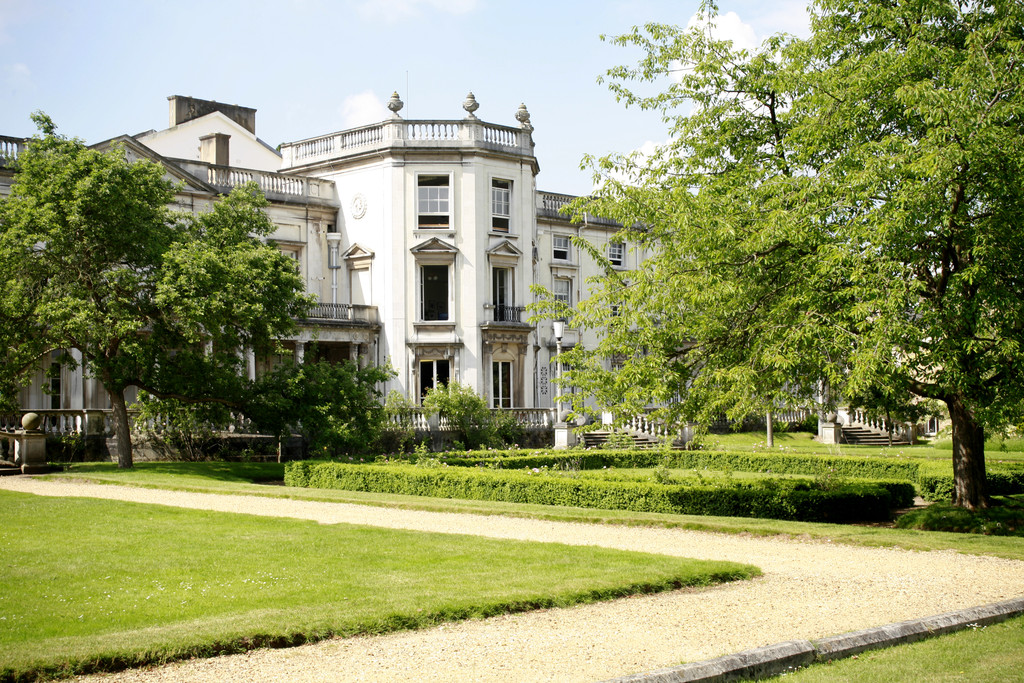
- 54 acres of parkland campus in London
- 180+ years of providing higher education
- 24/7 security so you feel safe on campus
- On campus gym, shops, cafes, bar and social spaces
The University of Roehampton was ranked #8 in England for undergraduate student satisfaction in the National Student Survey (NSS) 2024

University of Roehampton London
Studying with University of Roehampton will give you the best of both worlds: the friendly atmosphere of a traditional university campus, with the culture and nightlife of one of the greatest cities in the world.
You can enjoy woodland walks, views over the lake and grassy lawns for breaks in between classes and study. Between the 4 colleges there is a thriving social scene with their own sports teams, creating a healthy sense of competition and college pride.

Why choose the University of Roehampton
Postgraduate satisfaction
Ranked in the top 10 universities in the UK for postgraduate satisfaction – Postgraduate Taught Experience Survey 2022 and 2023.
Undergraduate student satisfaction
The University of Roehampton was ranked #8 in England for undergraduate student satisfaction in the National Student Survey (NSS) 2024.
Young universities worldwide
Ranked in the top 15% of young universities worldwide by Times Higher Education in the 2024 rankings.
Entry Requirements for
International Student Fees
You can find the applicable international student course fee for your chosen pathway study route listed below.
| Study Route | Tuition Fees (2025-26) |
|---|---|
| Direct Degree Admission – Postgraduate | MBA only – September – £19,250 GBP September – £18,250 GBP |
| Extended Masters | 2-terms – September – £7,000 GBP 1-term – September – £4,000 GBP |
| Direct Degree Admission – Undergraduate | From – September – £16,950 GBP |
| International Foundation Programme | September – £16,950 GBP |
| International Year One | September – £16,950 GBP |
|
Fees are not inclusive of scholarships. All applications are subject to a non-refundable admin fee of £220. Stated fees are for the International Foundation, International Year One and Extended Masters do not include tuition applicable for the degree course continued at the university. Programmes with a placement year are an additional £2,500. * Excluding MBA |
|
Scholarships at University of Roehampton
Reach out to our admissions team for details about scholarships available to you.
Oxford ELLT
English Language Level Test
Oxford ELLT is a trusted English language test that assesses reading, listening, writing and speaking skills for international study and admissions.
- 150,000+ students tested
- 250+ accepting institutions
- Delivered worldwide